Meet an Octopus
The octopus that pretends to be other animals
Meet the mimic octopus, which hides in plain sight by impersonating dangerous neighbors.
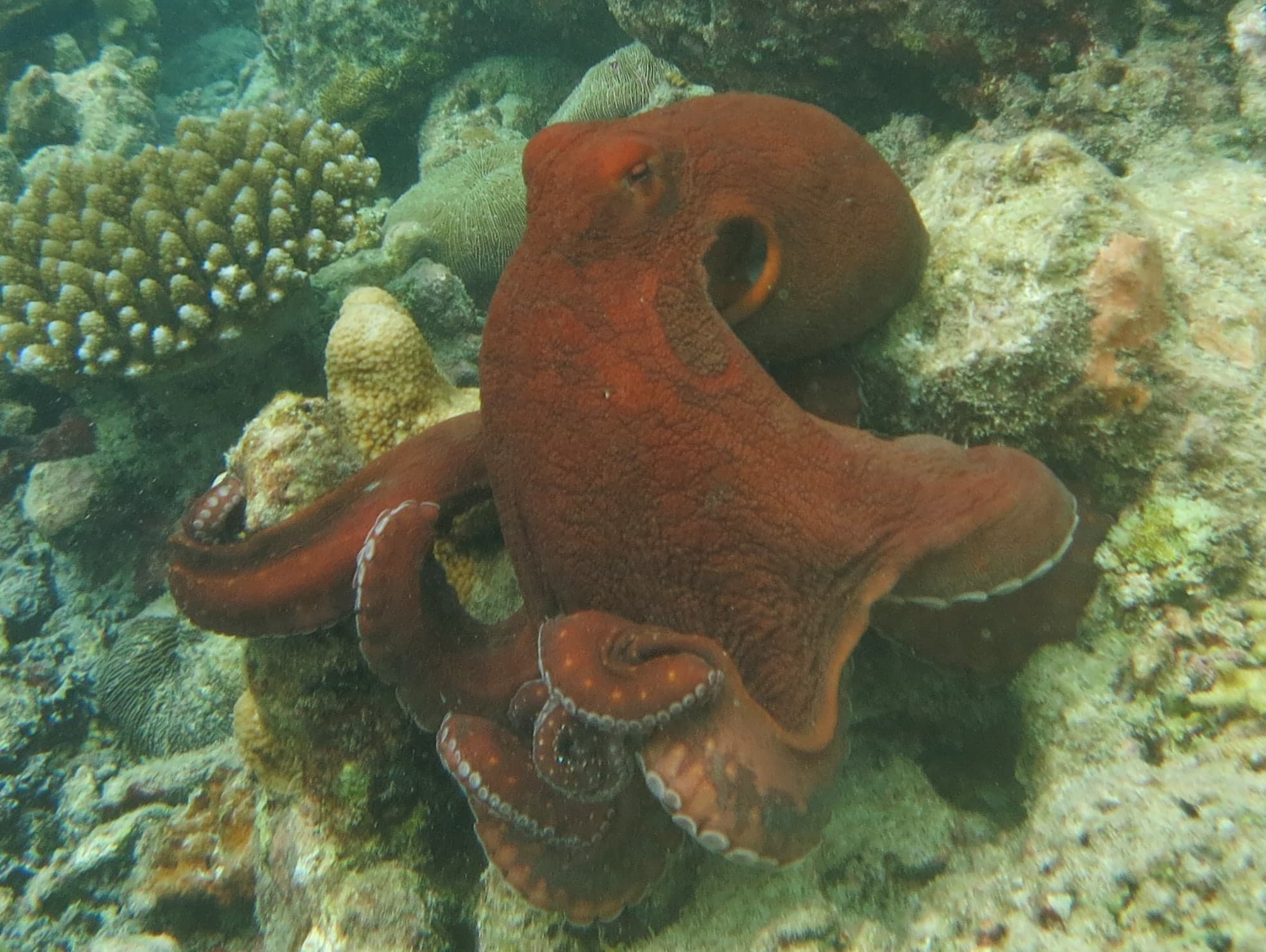
Most octopuses survive by not being seen. They can change the color, pattern and even the texture of their skin in a fraction of a second to blend into their surroundings. Source Hanlon, 2007(opens in a new tab)
One species takes a completely different approach.
Out in the open
During research dives in Indonesia, scientists filmed a long-armed octopus that was new to science. Unlike most octopuses, it came out in broad daylight to hunt across open sand, in full view of the fish that might eat it. Source Norman et al., 2001(opens in a new tab)
How does it get away with it? The researchers watched nine of these octopuses and found that several of their poses and patterns were clearly impersonations of venomous animals living in the same area. Source Norman et al., 2001(opens in a new tab)
Choosing a disguise
The most intriguing part is that the mimic octopus doesn't seem to stick to one costume. The researchers' observations suggest it makes decisions about which impersonation to use, depending on the kind of threat it's facing. Source Norman et al., 2001(opens in a new tab)
The scientists called this dynamic mimicry. Instead of being born looking like one dangerous animal, the octopus can switch between several.
A different kind of smart
Camouflage might not sound like intelligence, but matching a background, or a whole other animal, means taking in the world around you and responding to it in real time. For the mimic octopus, getting it right is a matter of survival.
It's one of the reasons octopuses are too smart to eat. You'll find the full eight on our science page.
Bucky saysLiked this? Becoming an Octopedarian takes about 20 seconds. Join the movement
Sources
- Hanlon, R. (2007). Cephalopod dynamic camouflage. Current Biology 17(11), R400–R404. doi:10.1016/j.cub.2007.03.034
- Norman, M. D., Finn, J., & Tregenza, T. (2001). Dynamic mimicry in an Indo-Malayan octopus. Proceedings of the Royal Society B 268(1478), 1755–1758. doi:10.1098/rspb.2001.1708