Science
An octopus mother's 53-month wait
Deep in the cold ocean, one octopus guarded her eggs for four and a half years.
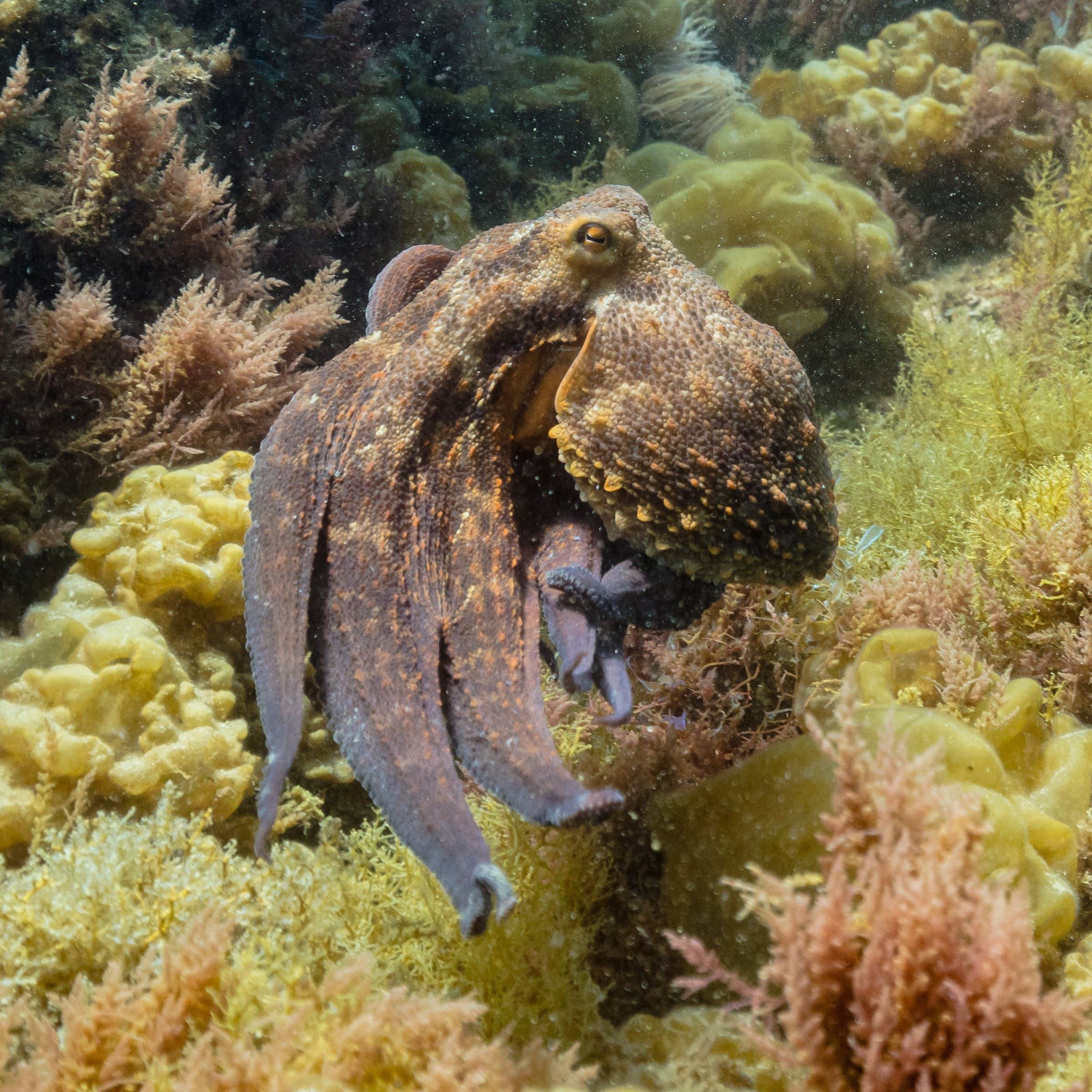
Most octopuses breed only once. A mother lays her eggs, guards them and cleans them until they hatch, and then her life comes to an end. In shallow water, that brooding usually lasts one to three months. Source Robison et al., 2014(opens in a new tab)
A visit to the deep
Off the coast of California, at a depth of about 1,400 meters, researchers came across a deep-sea octopus brooding her eggs on a rock face. They kept coming back to check on her. Source Robison et al., 2014(opens in a new tab)
She was still there, guarding her eggs, month after month. In the end, researchers recorded a brooding period of 53 months, about four and a half years. It's the longest egg-brooding period ever reported for any animal. Source Robison et al., 2014(opens in a new tab)
Never leaving her post
Crabs and shrimp that she might have eaten were often close by. But there's no evidence that females of her kind feed while brooding, and octopus mothers in general are believed to stop eating or eat very little while they guard their eggs. Source Robison et al., 2014(opens in a new tab)
Why so long?
In the cold, dark water of the deep sea, everything happens slowly, including the development of eggs. A long brooding period lets the young hatch large and well developed, giving them a better chance of surviving on their own from day one. Source Robison et al., 2014(opens in a new tab)
It's one of the eight reasons octopuses are too smart to eat. And it's a hard story to forget the next time you see octopus on a menu.
Bucky saysLiked this? Becoming an Octopedarian takes about 20 seconds. Join the movement
Sources
- Robison, B., Seibel, B., & Drazen, J. (2014). Deep-Sea Octopus (Graneledone boreopacifica) Conducts the Longest-Known Egg-Brooding Period of Any Animal. PLOS ONE 9(7), e103437. doi:10.1371/journal.pone.0103437